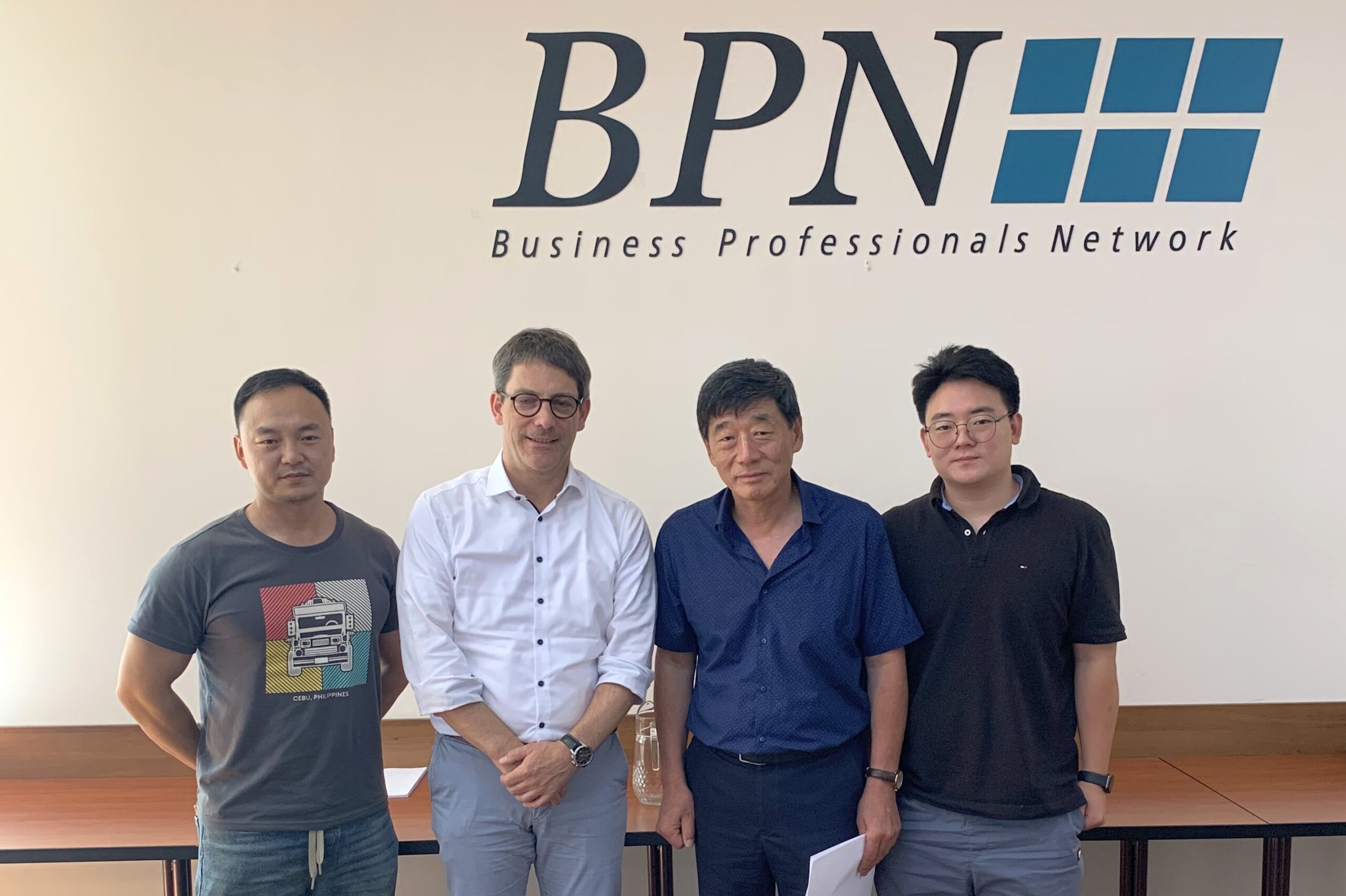
It is exciting and instructive to get to know new cultures. Our pro bono engagement for BPN (Business Professional Network) in Kyrgyzstan gave us the opportunity to gain a deeper insight into another culture and other traditions in the context of business succession. We held a seminar in Kyrgyzstan on the topic of business succession and subsequently conducted various coaching sessions with entrepreneurs (at this point, a big thank you to the professional translation from German into Russian and vice versa). After our return, we asked ourselves what was different, new and instructive for us in Switzerland and for Kyrgyzstan?
Entrepreneurial spirit and high flexibility
We from the St. Gallen succession were able to get to know a country and people who live in an environment of countless upheavals, who grew up in it and were shaped by it. The dissolution of the USSR gave Kyrgyzstan independence from Russia. This was a big step for the country and the economic system behind it. The departure from the planned economy initially led to a crisis. Supply and demand had to develop anew and a new framework had to be created for this.
We got the impression that this "demarcation" from Russia in Kyrgyzstan creates a sense of identity for the people who live in the country. At the same time - and we were not aware of this beforehand - there are around 80 different ethnic groups in the country. From the entrepreneur with South Korean roots in the 3rd generation, to Mongolians, Russians, Kyrgyz and people of Arab descent - Kyrgyzstan is a country of "nomadic diversity".

Since independence, the country has experienced several revolutions. This is the context where entrepreneurship sprouts. We have seen a high degree of entrepreneurial flexibility (changing industries over time is not uncommon), a spirit of optimism and the urge to be self-employed and independent, as people have experienced that the political climate can change rapidly and therefore everything can be different tomorrow.
This is a big difference to our long-term political stability. We have observed that, for this reason, "predetermined breaking points" are built in at various points or various assets are transferred to different family members as a precautionary measure in order to protect themselves as a family as broadly as possible. Necessity is the mother of invention and requires a degree of flexibility that we find impressive.
The role of women in succession
We heard the following phrase several times: "My daughter is married and therefore she now belongs to another family, which is why I am no longer financially responsible for her." This tradition is still very firmly rooted, especially in rural regions. In our conversations with various young local female entrepreneurs today, we hear statements such as: "I will never get married because I don't want my family of origin's assets to be torn apart" or "I founded and built up my own business because I haven't received any support from my family of origin since I got married."
Western values clash with traditional local values for a young generation and lead to individual and independent solutions. We also noticed that many women entrepreneurs take on an incredible amount of responsibility for family AND business. They put their own needs on the back burner. This heavy burden over years or decades leaves its mark.
Youth before age
Here in Switzerland, it was often said that the eldest son would take over the farm. In Kyrgyzstan, we often heard it said that the youngest son would take over the business (and not the first-born). We asked: Why the youngest? The reasoning behind this is that the youngest son will live the longest, which means that the parents' financial support is guaranteed for longer. In many families, the parents' duty of care is passed on to the next generation, which is not (or no longer) the case in Switzerland.
Fairness and justice
On the subject of distributive justice, we talked to the entrepreneurs about our Western-style principle of performance, equality and need. Kyrgyz tradition stipulates that the business is passed on to the youngest son free of charge. With regard to the principle of need, this means that the parents' financial provision is to be made by the generation taking over - traditionally, this is how the balance is ensured. The principle of equality is a distant second - followed by the principle of performance.
It was exciting for the participants from Kyrgyzstan to realize that in Switzerland a company is often sold to descendants within the family and not transferred free of charge (e.g. as a gift). In Switzerland, we therefore have an approach that takes into account the principle of merit. Some participants took up the idea immediately and are pursuing it further. This could be a potential game changer for individual intra-family discussions, the results of which we will be happy to find out in 3-4 years' time.

Understanding is more than words
We were lucky to have wonderful intercultural translators who made it possible for us to communicate German/English - Russian at all. In our conversations with the entrepreneurs, we quickly realized that communication requires completely different components: We encountered a language and mode of expression that is peppered with warm and emotional phrases and images. We adopted this, which led to a heart-to-heart exchange that touched us deeply.
The hospitality and gratitude for our work that we experienced was just as touching: be it the tea or coffee with cookies after the coaching sessions, the hugs between women or gifts of local handicrafts that now remind us of Kyrgyzstan here in Switzerland.
Conclusion
We can look back on five great and dedicated days and would like to take this opportunity to thank all of BPN Kyrgyzstan's local employees once again. Thanks to their commitment, they have done a great job of building up the company over the past 25 years and made many entrepreneurial livelihoods possible. If these companies can be transferred to the next generation, then a significant economic step has been taken, as there is still no tradition or experience of succession as there is here in Switzerland. We are pleased that we were able to contribute to this success and provide the necessary impetus.

Photo credits: Claudia Buchmann, Frank Halter, BPN Kyrgyzstan