In January 2024, Daniel Matter, responsible for the training materials at BPN, took an important step in terms of quality control: the BPN seminar materials on financial management were submitted to the ZHAW for review. After a comprehensive, two-stage review by the ZHAW's financial management experts, Ms. Nagel, Mr. Hecht and Mr. Buchs, BPN's documents were revised accordingly and finally approved in autumn 2024. This means that BPN's financial management seminar is now officially audited by the ZHAW.
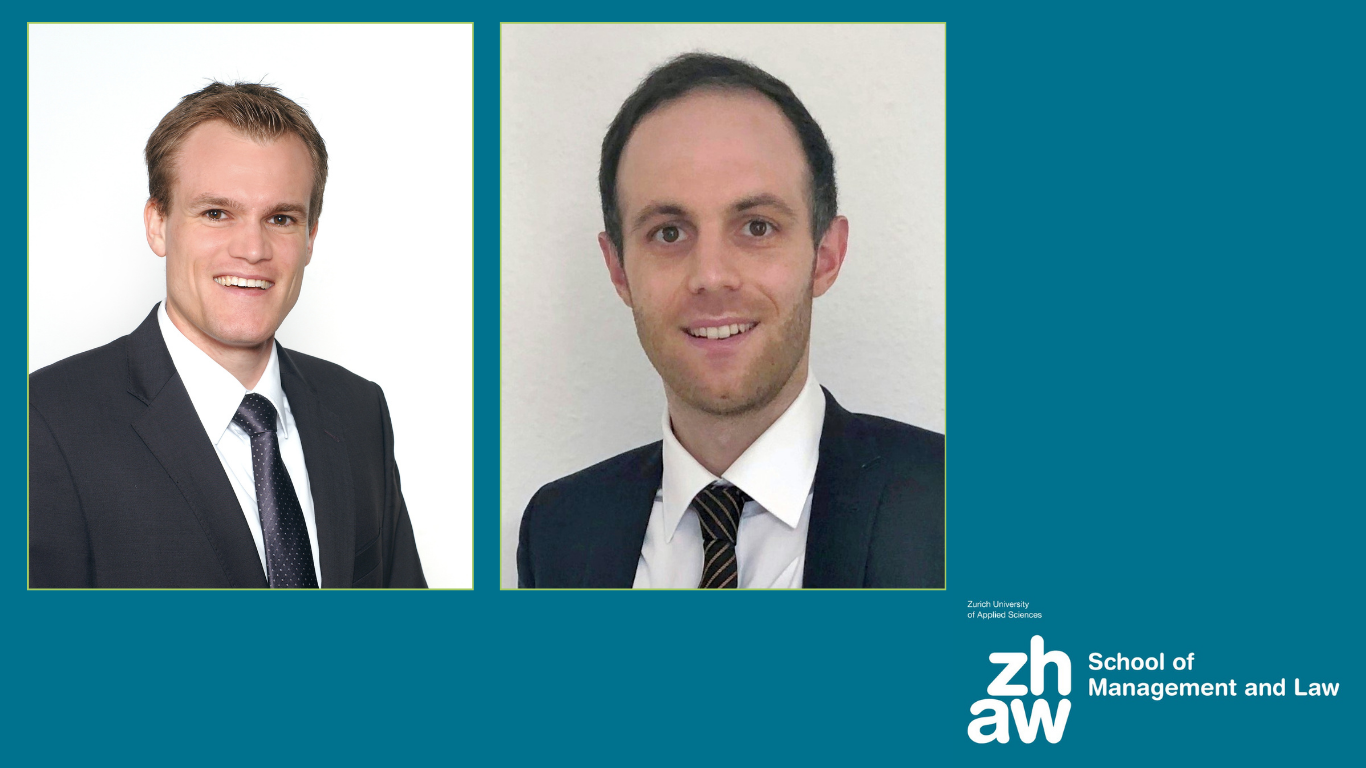
Interview with Andreas Hecht and Andreas Buchs from the Institute of Financial Management at the ZHAW
Mr. Hecht and Mr. Buchs, over the past year you have been working intensively with our training materials for the financial management seminar for entrepreneurs in the BPN countries. What was your first impression of the BPN financial management seminar?
Mr. Hecht: Our first impression was very positive. The documents had a clear structure and the aim of teaching entrepreneurs in the BPN countries the basic principles of financial management was clearly recognizable from the outset. What we particularly liked was the focus on didactics and practical examples based on the real challenges of the target group.
Mr. Buchs: I found 3 points remarkable. Firstly, the wide range of topics that were covered in the "only" 200-page training presentation by setting the right priorities. The training starts with the topic of "Money and value creation" and ends with "Break-even calculations" - there is a considerable range of relevant content in between. Secondly, this is the practical approach mentioned by my colleague, whereby the entrepreneurs are not only taught the theoretical concepts, but these are combined with practical tools for everyday use. Thirdly, it was the willingness and openness on the part of BPN to really want to further develop the training materials as part of the project. This was of course also motivating for our work.
Can you give us an insight into the process? How did you proceed?
Mr. Hecht: The review process was a two-stage process. In the first phase, we reviewed the documents in their entirety, i.e. both the accuracy of the content and the didactic structure. We made sure that the theoretical concepts were explained correctly and comprehensibly and that they were applied consistently within the financial management seminar. After this first review, BPN revised the material, which was then followed by our second review, in which we focused on the changes that had been made.
Mr. Buchs: In addition to the 2 review cycles, we also held 2 workshops on site in Winterthur. On the one hand, the focus was on discussing the content of specific issues and our feedback from the reviews. On the other hand, it was also important for us to listen and understand who the addressees of the training courses are and what challenges they face in their day-to-day work. The review activities and our input had to be geared towards them. Mr. Matter introduced us to numerous entrepreneurs and told us about their day-to-day work. That was very exciting for us.
After the first review, BPN revised the documents where necessary and then submitted them for a second review before they were approved by you. What did BPN have to work on? What gaps or corrections did you uncover?
Mr. Buchs: During the initial review, we were already impressed by BPN's ability to present so many topics in a compact way at an excellent "flight level". The jumping-off point for the review was therefore very good. The main focus of our work was on the accuracy of the content, the consistency of the explanations across all the learning materials and on providing approaches for new examples or improved presentations for discussion.
Mr. Hecht: One example would be a simplification of the liquidity plan, which we have proposed. A new structure with fewer sections and simplified items, taking into account the revised planning of the balance sheet and income statement, should represent added value for the participants. The implementation by BPN was clear and goal-oriented.
To what extent was the cultural context of the BPN countries taken into account when revising the documents?
Mr. Hecht: The cultural context is crucial for the success of such training courses. It was important for us not to look at the documents with "Swiss glasses", but to keep the local circumstances in mind. The content must be theoretically correct and well-founded, but the participants must not be lost in too much theory.
Mr. Buchs: The aim in this context was to make the training documents as "universally valid" as possible so that they do justice to the variety of countries in which BPN operates. In this context, we were able to draw on the explanations and experience of Mr. Matter. He knows the local conditions very well and scrutinized our inputs in the light of their practical suitability.
BPN invested a good 300 working hours to process your feedback. What is your impression of BPN's training program? Would you recommend our financial management seminar for entrepreneurs?
Mr. Hecht: Yes! I would have recommended the financial management seminar for entrepreneurs before. The revised version of the documents now ensures that concepts and terminology are applied more uniformly and consistently. The seminar provides clear added value for the participants.
Mr. Buchs: I gladly agree with that. The seminar provides participants with sound specialist knowledge in a practical way - that's what entrepreneurs need.
Is it common for you to review documents from non-profit organizations?
Mr Hecht: It is not our core task, but we have generally worked with a number of non-profit organizations at the institute in the past. It is important for us to support organizations that are not primarily profit-oriented with high-quality content. For us, the project was a real matter of the heart, a project with meaning and the right focus for the world.
What long-term benefits do you see from the ZHAW review for BPN and the participants in the seminars?
Mr. Hecht: The biggest advantage could be the increased credibility. An external review and certification by a university such as the ZHAW can create trust among participants and BPN partners. This shows that the content has not only been developed internally, but has also been tested and approved by independent experts.
Mr. Buchs: The certificate and the signal it sends out to third parties is certainly an advantage. Nevertheless, the content of the work itself is also important to me. A review - let's call it a second opinion in more general terms - is always a good way of scrutinizing your own work once again and developing it further in the discussion.
What was special about the project for you?
Mr Hecht: For me, it was particularly inspiring to work with an organization like BPN, which is active in education and training in various developing and emerging countries. The collaboration was very inspiring and it was nice to see how passionate everyone involved is about their work.
Mr. Buchs: I agree with my colleague. Everyone involved in the project was clearly willing to deliver a good end result in the interests of the cause. Mr. Matter's commitment and his openness to our input were impressive.
Is there anything else you would like to tell our readers?
Mr. Buchs: Education is a valuable asset that we should take care of. As a lecturer at a university of applied sciences, I particularly recognize the value of education in the context of business practice. I was therefore delighted to be able to implement the BPN Foundation project together with my colleagues at the ZHAW.
Mr. Hecht: I agree with that. "Education is the most powerful weapon which you can use to change the world" - said Nelson Mandela. Education and training are the key to sustainable growth - both for individuals and for companies. BPN makes an important contribution here.
The kick-off meeting for the next BPN seminar has already taken place. Next, our marketing seminar will be scrutinized by the ZHAW. To be continued...